

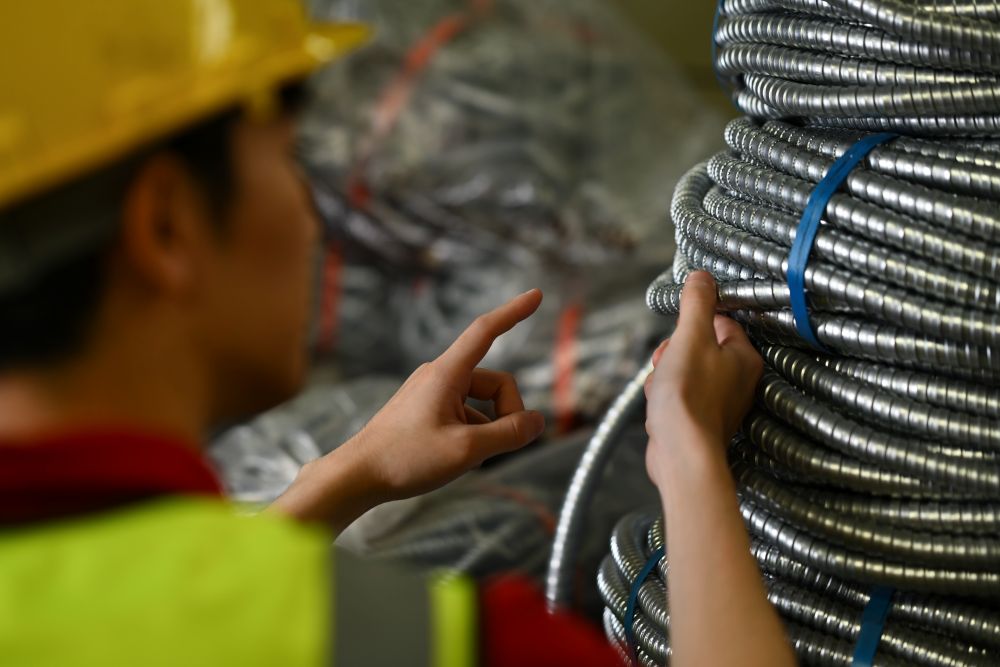
How to choose the right flexible conduit cable protection for your project
How to choose the right flexible conduit cable protection for your project https://flex-it.co.uk/wp-content/uploads/2019/11/worker-inspecting-flexible-metal-conduit-in-wareho-2026-09-22-22-17-36-utc.jpg 1000 667 Flex-It Co. Uk - Flexible Conduit Systems & Wiring Accessories https://flex-it.co.uk/wp-content/uploads/2019/11/worker-inspecting-flexible-metal-conduit-in-wareho-2026-09-22-22-17-36-utc.jpgLooking for a solution to keep your wires neat and tidy? Maybe you need something to protect them from heat or moisture? No matter your requirements, flexible conduits are sure to help.
From protecting wires from dirt, dust, and water to providing strength and flexibility, investing in this kind of protection is a no-brainer. Whether you’re working on a domestic rewiring, a large industrial installation, or something in between, the right protection ensures longevity, safety, and compliance.
Conduits are great for protecting and routing wires and cables, but there are many different types of cable protection on the market. Searching for the right conduit can be time-consuming – especially if you don’t know much about the different types of flexible conduit that are available.
At Flex-It, we’ve been supplying an extensive range of high-quality flexible conduits for decades, so when it comes to cable protection and containment, we know what we’re talking about.
Whether you’re looking for a solution to organise the wires beneath your WFH desk or to protect the cables used in an industrial project you’re working on, here’s a quick guide to flexible conduit systems to help make the conduit selection process easier for you.

Step 1) Understanding the environment and application
Before you can pick a product to order, you should consider these key questions:
- Where is the installation? Indoor or outdoor? Underground or exposed? Industrial or domestic?
- What hazards does the cable need protection from? Heavy foot traffic, vehicles, chemical exposure, UV radiation, moisture ingress, mechanical impact?
- What service life and temperature range are required? Some cable protection systems cope with wide temperature ranges and hostile conditions.
- What safety regulations or standards apply? For example, does the project demand fire-rated containment, low-smoke halogen-free materials, or IP68 ingress protection?
- What are the size and flexibility constraints? How many cables are involved, and how long are they? Will bends and routing be tight?
Working through the answers will set the stage for selecting the right material and product series.
Step 2) Exploring flexible conduit materials and types
At Flex-It, we categorise cable protection and containment into a few broad types of protective conduit systems, aligned with our product range. The options below are a brief summary.
Rigid and semi-rigid conduit systems
For robust protection and applications where the cable path is clearly defined (e.g., walls, buried ducts, fixed infrastructure), you might opt for rigid or semi-rigid conduit.
While this blog focuses more on flexible protection, you should keep rigid options in mind for projects where the cable route is stable and physical protection is paramount.
Flexible conduit and corrugated tubing
Flexible conduit is often the go-to solution when you need to run cables through confined spaces, around bends, or in places where future access is required for checks or adjustments.
Flexible corrugated conduit, with its ribbed design, can bend easily around corners and into tight spaces where rigid conduit won’t fit, while shielding wires from abrasion and moisture.
Cable trunking, ducts, and containment systems
For larger cable bundles, horizontal and vertical risers, or locations where neat visual routing is required (e.g., data centres, office fit-outs), containment systems such as trunking and ducts may be appropriate.
Flexible trunking systems are ideal for bundling and directing audiovisual, data, or electrical wires so they’re neatly out of the way, especially in complex layouts.
Surface protection and cable armour
Some installations (e.g., exposed outdoor runs, high foot traffic areas, machines with vibration), may need additional protection such as metal armouring, over-braided sleeving, or impact-resistant jackets.
For example, stainless steel conduit is still flexible, but offers greater mechanical and chemical protection than plastic, while braided polyester cable socks protect against abrasion.
Cable glands, accessories, and ingress protection
Protection doesn’t stop at the conduit or duct. You must ensure the entire path, including glanding and terminations, is adequately protected, particularly when IP ratings or fire ratings are required.
At Flex-It, we supply a variety of flexible conduit accessories, from cable insertion tools, locknuts, and conduit clips to plastic couplers, washers, and adapters. Our flexible conduit accessories guarantee an economical solution for securing conduit and ensuring cables are fully protected.
Step 3) Choosing between metallic and non-metallic flexible conduit
One of the most important decisions you’ll need to make when narrowing down your product choice is whether you need a flexible metal conduit or non-metallic conduit.
Metallic flexible conduits
Strong, flexible metal conduits offer much better compression resistance than non-metallic conduits, delivering excellent mechanical strength and wide temperature-range performance.
Ideal for heavier-duty industrial uses, they protect against cuts and punctures or animals chewing through cables. Easy to install, they can be easily twisted and turned without the use of elbow joints, although for tight spot applications we have threaded elbow adapters available.
When it comes to protecting cables against water, vibration, corrosion, and more, you can’t go wrong with metallic conduits from Flex-It. Our metallic conduits are available in an assortment of sizes, including various coil sizes and internal and external diameters.
There are many different variations available, from plain galvanised steel and PVC-covered steel to liquid-tight and LSOH-covered steel – but they’re all suited to demanding outdoor cabling projects:
- B-Series Plain Galvanised Steel
- C-Series PVC Covered Steel
- C-Series LSOH Low Smoke Zero Halogen Covered Steel
- D-Series Liquid-Tight Metallic
- F-Series Steel Over-braided
- SS-Series Stainless Steel
Take the D-Series, for example. Thanks to their plastic coating and sealed fittings, these conduits make the perfect choice for lighting, communication, air-conditioning, and fire alarm systems, along with a list of other challenging environments.
Non-metallic flexible conduits
Non-metallic conduits, on the other hand, are better suited to indoor wiring jobs. Being resistant to moisture and corrosion and super easy to install, they’re fit for a range of commercial and domestic purposes and are sure to help keep your cables neat, tidy, and safe.
Whether you need flexible conduit for TV cables or to tidy up the tangle of wires beneath your work-from-home desk, non-metal conduits are excellent for moderate environments.
Our non-metallic flexible conduits are ideal for a range of applications, including communication cables and fibre optics. Some non-metallic conduits are also suitable for outdoor use and offer excellent UV resistance, and some can be used underground and in wet areas, like swimming pools or spas.
Lighter and more economical than their metallic counterparts, non-metallic conduits are often corrugated on the outside for extra flexibility. Made from a variety of plastic polymers, we have ranges manufactured from PVC, polypropylene, and PA6 nylon to suit different applications:
- A-Series PVC Spiral Reinforced
- G-Series Extra HD PVC Spiral Reinforced
- H-Series PA6 Nylon Corrugated
- HS-Series Split PA6 Nylon Corrugated
- R-Series Polypropylene Corrugated
- RS-Series Split Polypropylene Corrugated
For example, when high durability and flexibility is needed, PVC spiral reinforced conduits have a spiral construction that enables them to snake through walls and facilitates easy cable insertion.
Step 4) Matching the right product to your project
Both metallic and non-metallic conduits can be used in pretty much any wiring project, but some will do a better job at encasing and protecting your wires than others, depending on your needs.
Once you’ve determined the environment and application, you can identify an appropriate product series from Flex-It. Here’s how to think about environmental requirements:
Domestic or light commercial installations
- Environments: Indoor, dry, no heavy mechanical hazards.
- Solutions: Non-metallic flexible conduit (e.g., PA6 nylon, PVC spiral) for ease of routing.
- Benefits: Simple to install, cost-effective, good for retrofit work, maintains accessibility.
Moderate industrial or outdoor installations
- Environments: Exposed to weather, UV, chemical spray, moderate traffic.
- Solutions: Non-metallic corrugated tubing or PVC-covered metallic flexible conduit.
- Benefits: UV, chemical, and corrosion resistance, good ingress control, increased durability.
Heavy-duty or critical infrastructure
- Environments: High mechanical stress, extreme temperatures, underground or buried conduit.
- Solutions: Metallic flexible conduit (galvanised steel, stainless steel) or specially rated trunking or armoured systems; IP-rated sealed glands, fire-rated accessories.
- Benefits: Longest life span, best for demanding applications, meets high-end specifications.
Key factors to check before you buy flexible conduit for cables:
When selecting cable protection, make sure you review and compare the following:
- Ingress protection (IP rating): If exposed to water, dust, or wash-down, look for IP 65 and above, or up to IP 68 for submerged or buried applications.
- Temperature range: Some metallic systems cope with -50 °C to +400 °C, while non-metallic options may support smaller ranges from -40 °C to +120 °C.
- Mechanical robustness: Impact resistance, crush resistance, foot/vehicular traffic suitability.
- Chemical/corrosion resistance: Essential in outdoor, industrial, food processing, or marine settings.
- Flexibility and ease of routing: Installation and future access with tight bends or complex shapes.
- Fire and 18th Edition (BS 7671) compliance: Low Smoke Zero Halogen (LSOH) or fire-rated products.
- Accessory availability: Glands, couplers, bends, clips, and other fittings that match the system. Check that you can source the full system from one supplier (like Flex-It) to ensure compatibility.
- Stock and delivery: For tight project schedules, consider suppliers who hold stock with fast delivery.
Find the flexible conduit you need at Flex-It
To determine which conduit is most suitable for your project, take your time weighing up the pros and cons of each type and give our experts a call if you need further advice.
As a family-run business founded in 1995, Flex-It has built its reputation on providing robust, reliable cable protection solutions, backed by technical expertise and stocked for fast turnaround.
Across domestic, commercial, and industrial sectors, our product range caters for all levels of demand, from DIY installs to bespoke large-scale projects. All our products are manufactured to the highest quality and ensure cables are fully protected in their specific installation environment.
Our team can guide you through the selection process, helping with sizing information, routing advice, compliance queries, and accessory matching, so you can order the best conduit system for your needs.
To discuss your flexible cable management requirements, get in touch with Flex-It on 01530 812 195, or email sales@flex-it.co.uk and we’ll get back to you as soon as we can.
To go ahead and place an order with us, enquire now, supply a few project details as well as the product code(s), and we’ll begin working on it right away – providing updates along the way so you know when to expect your conduits to arrive.
Frequently Asked Questions
Flexible conduits, in all their forms, can be used for a variety of different purposes, including:
- Cable protection – Used primarily to encase and shield wires, flexible conduits help reduce the risk of electrical hazards in the home or workplace.
- Cable tidying/management – Wires can get tangled easily, making it difficult for you to see exactly what leads where. Flexible conduits allow you to keep your wires organised, and they also reduce trip hazards and the frustration of plugging and unplugging the wrong wires.
- High-temperature applications – Typical high-temperature applications include underfloor heating and lighting fixtures. Not all flexible conduits are designed to withstand high temperatures, but the ones that are provide excellent protection for encased wires.
- Commercial and industrial environments – Most flexible conduits are ideal for static and dynamic use in commercial buildings, thanks to their high mechanical strength and weatherproofing.
- Public areas – Wherever public safety is a priority, for example in hospitals, shopping centres, and train or bus stations, flexible conduits provide peace of mind. In the event of a fire, C-series conduits meet all European guidelines for toxic gas emissions and smoke density, making them ideal for use in fire alarm and air conditioning systems.
One of the biggest benefits that flexible conduits have to offer is durability.
No matter which conduit you choose, or what you use it for, they provide long-lasting protection for all of your wires. They can withstand moisture, contaminants like dust, corrosion, and impacts.
Of course, if you want to get the longest lifespan out of your flexible conduit, you need to make sure the one you choose is suitable for your wiring project – otherwise, you may have to replace it sooner than necessary if it isn’t compatible with the environmental conditions.
For help choosing the right conduit for your project, get in touch with our experts today.
Generally, flexible conduits are extremely affordable, but the price you’ll pay depends on factors like the type of conduit you need (metallic, non-metallic, etc.) and the size.
Here at Flex It, we pride ourselves on being able to offer the highest quality flexible conduits at some of the most affordable prices on the market in the UK.
However, our products being more affordable doesn’t mean we make any sacrifices to their quality. When you buy flexible conduits from us, you can be confident that you’re getting value for money.
Flex It customers can benefit from:
- A wide in-stock range of conduits, glands, and containment systems
- Technical documentation and specification support
- Expertise based on thousands of successful installations
To place an order or find out more about our range of flexible conduits, give our sales team a call on 01530 812 195, or send us a message by clicking the ‘enquire now’ button.
Every cable you install is exposed to potential hazards: mechanical impact, moisture, UV, chemicals, abrasion, rodents, and more. Without adequate protection, stray wires become weak points in the system and can quickly turn into costly failures or safety hazards.
Whether you’re a professional contractor or a facilities manager working alongside engineers, choosing the right cable protection product from the right source means fewer call-backs, fewer defects, and a stronger finished job that you can count on to last.
Here at Flex It, we’ve been in business for over 20 years, and our core focus has always been to provide our customers with the highest quality, most affordable flexible conduit systems and unmatched customer service. We deliver solutions that assist with both physical protection and complying with regulations – safeguarding the environment and ensuring long-term reliability.
As a small family-run business, we’re immensely proud of the reputation we’ve built for ourselves, having worked with some of the most high-profile businesses and organisations in the country.
Not only do we offer a huge range of products, but we can also supply contractor packs, which offer a convenient and cost-effective way to buy flexible conduit and fittings, allowing you to buy the conduit lengths you need rather than a full coil – making flexible cable management easier.
If you require more information about any of our products or need help choosing flexible conduits for your wiring project, our team is always happy to help if you give us a call!
In general, PA6 nylon and HDPE (high-density polyethylene) conduits with UV resistance and stainless steel liquid-tight conduits with chemical-resistant jackets offer the best performance in environments with constant UV exposure and chemical spill risks.
Without UV stabilisers, standard plastic conduits can become brittle and crack, so always verify the specific ingress, UV, and chemical protection required for the specific environment.
For situations that require a high degree of corrosion protection, we often recommend our metallic SS-Series stainless steel conduit range, as it’s suitable for steel, marine, and shipbuilding applications. The SS-Series can effectively encase temperature-measuring devices, sensitive fibre optics, and electronic cables – protecting them against damage.
If you’re looking for a flexible conduit to protect cables in a public building, PA6 nylon conduits like the corrugated, non-metallic H-Series are an excellent choice. They meet European guidelines for toxic gas emissions and smoke density and can be used in train stations, airports, underground stations, hospitals, and other public areas where safety is a priority.
The most suitable flexible conduit for use in a hazardous area depends on the zone classification and primary hazards, but the best heavy-duty conduits are manufactured from stainless steel and/or have a liquid-tight metallic construction, with fittings certified for the area conditions.
For example, stainless steel conduit systems like the SS Series provide maximum resistance to extreme temperatures, chemical corrosion, and high mechanical impacts. Liquid-tight metal conduits like the D-Series provide high ingress protection against dust, water, and chemicals.
Stainless steel is used in marine, offshore, and chemical plant environments, while galvanised steel is used in general heavy-duty industrial environments. Standard plastic or nylon conduits are not suitable for settings with severe thermal or mechanical extremes or high-risk explosion zones.
Please note: While we can offer advice, it is the customer’s responsibility to ensure that their flexible conduit system is compatible with the installation environment and complies with all relevant health and safety regulations and standards.